
Polished Concrete
Concrete slabs have an inherent natural beauty, but until recently, residential and retail facilities preferred floor coverings such as vinyl composite tile, decorative tile or terazzo, to make up for the perceived lack luster of concrete's natural state.
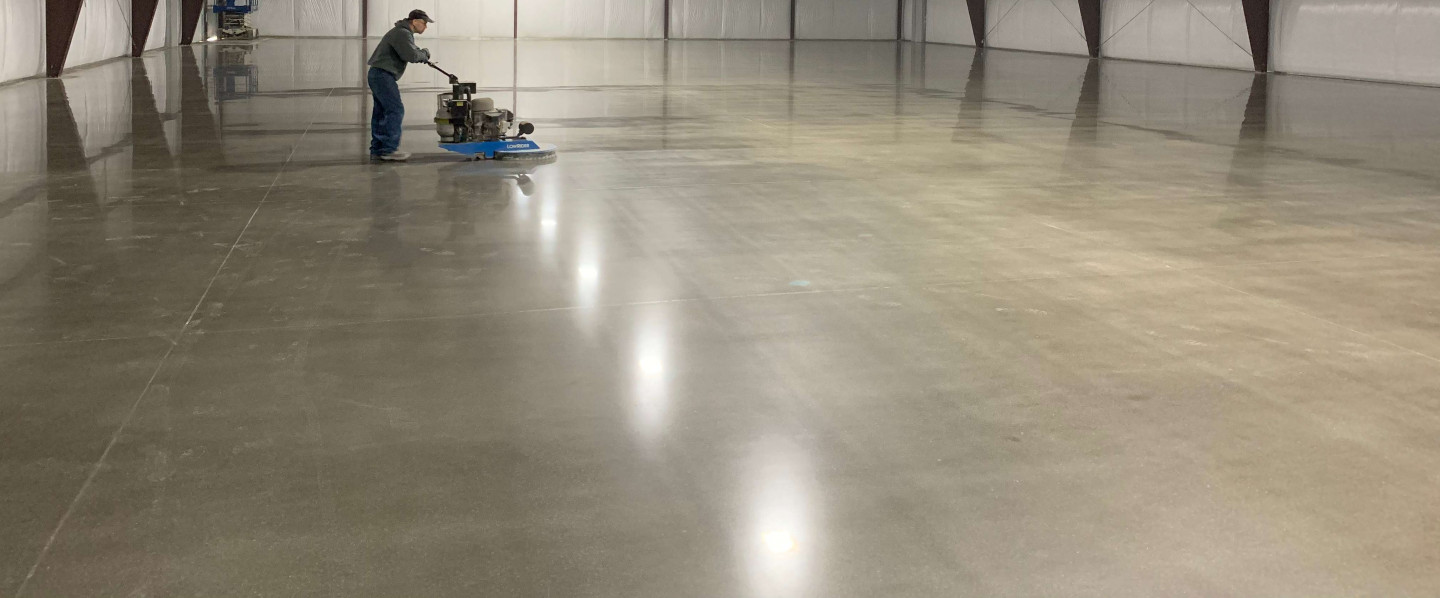
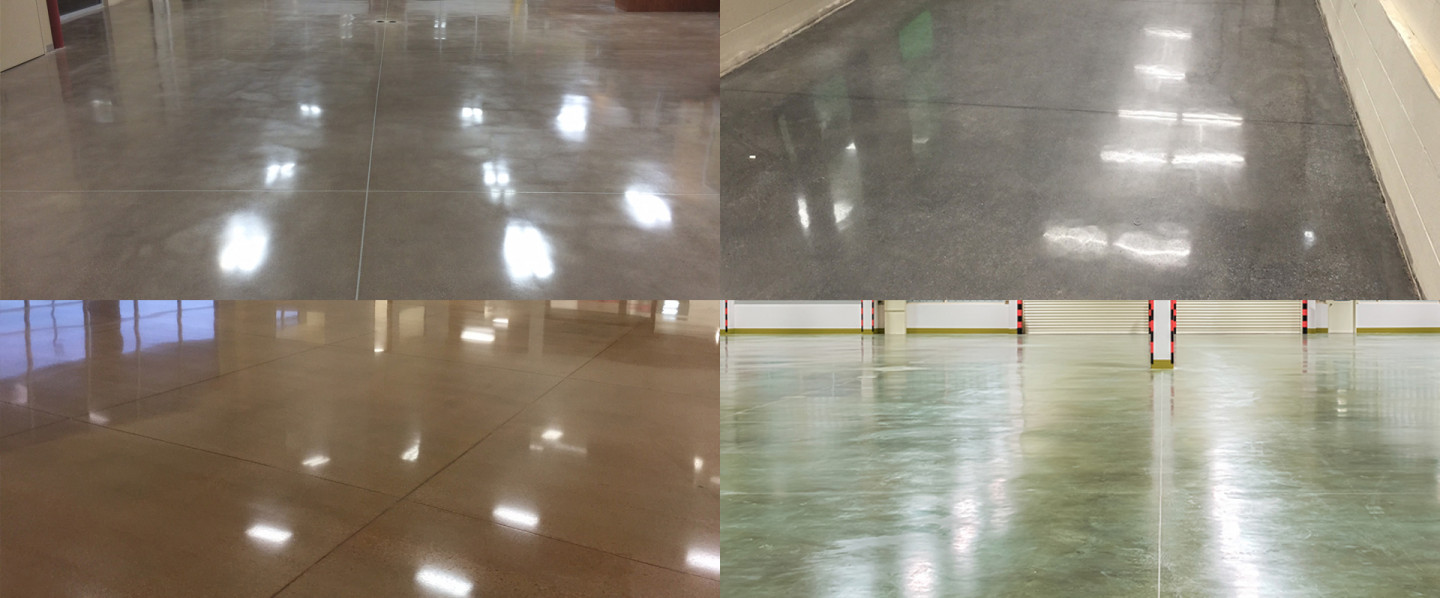
Polished concrete is rapidly becoming very popular to all industries, as it provides durability and aesthetic value. Both topical and mechanical polishing can result in a glossy appearance, however they are very different techniques. Differences in these processes greatly affect cost as well as finish and surface longevity.
Benefits of Polished Concrete
- Elimination of Dusting from Efflorescence
In ordinary unpolished concrete, tiny particles of dust are pushed to the surface through an upward force called hydrostatic pressure, resulting in efflorescene. Efflorescene leads to dusting, which forces epoxies off of the surface of concrete floors, and can make maintenance a costly priority. - Stain-Resistant
By densifying and sealing the surface, polished concrete transforms a porous concrete floor into a tightened floor that is dense enough to repel water, oil, and other contaminants, preventing them from penetrating the surface. - Improved Reflectivity and Ambient Lighting
The reflective properties of a polished concrete floor increases the lighting in facilities. Increased ambient lighting will reduce the energy bill as well as look beautiful. - Increased Slip Resistance
Polished concrete, though quite shiny, does not create a slippery floor. In fact, the benefits of mechanically grinding and flattening the floor will increase the coefficient of friction when compared to ordinary concrete. Polished concrete often exceeds OSHA standards for floors. (ASTM C 1028) - Less Maintenance
Most floor systems, including tile and linoleum, require aggressive scrubbing to maintain a clean environment and nice appearance. Polished concrete surfaces are tightly compacted, reducing stains, and do not require any waxing or stripping to maintain the sheen. - Cost-Effective
Polished concrete will reduce energy and maintenance costs significantly through reflectivity and ambient lighting, reduction in upkeep (such as waxing), and reduced tire wear. - LEED Friendly
Polished concrete not only utilizes existing concrete surfaces, eliminating additional materials such as coverings/coatings and moving towards sustainable building, it typically contains no noticeable VOC’s, making it friendly for any USBG LEED project. - Improved condition for old floors
(Mechanical Polish Only)
As concrete ages, surface stress, delamination, curled cold joints, and other problems can arise. Mechanically grinding the floor will remove the top surface of the old concrete and polishing will then strengthen it, increasing it's impact and abrasion resistance.
- Reduced Tire Wear (Mechanical Polish)
The rough, uneven texture of natural concrete causes tires to abrade, adding to their wear. A polished concrete floor system will level the joints and make the entire surface smooth, preventing this abrasion. - No Production/Plant Shutdowns
(Dry-Polish Mechanical)
Dry-Mechanically polished concrete can be put into service immediately after the process is complete. Due to the cleanliness of the process and the lack of toxic or hazardous chemicals, floors can often be serviced while the plant is in full production.
Decorative Polishing
Abundant options including colorants, saw cuts, engraving, even stenciled art create an aesthetically appealing floor that is durable and lasting without breaking the budget.
Sheen Level/Finish Options
- Colorants
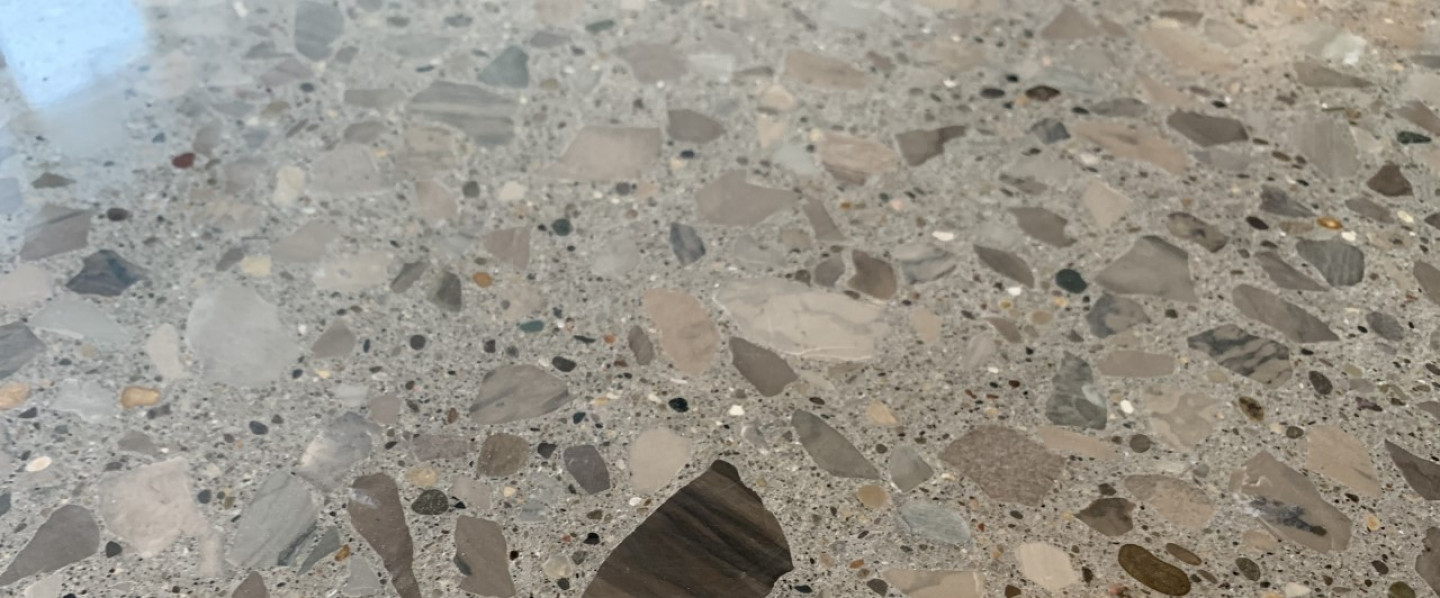
- Exposed Aggregates
- Patterns
- Logos/Engraving
- Acid Staining
Benefits Overview
- Less expensive than terrazzo, marble, or granites
- Ideal for residential and retail applications
- Colored, Matte, Low Gloss, Moderate Gloss, or High Gloss Shine
- Aggregate exposure options: Cream, Small Agg, or Large Agg
- Improved Ambient Lighting
- Color Options
- Saw cuts
- Patterns
- Uniform, monolithic look


